
Review · WAITEMATA HARBOUR BOAT TRIPS
Glass Bottom Boat Tour
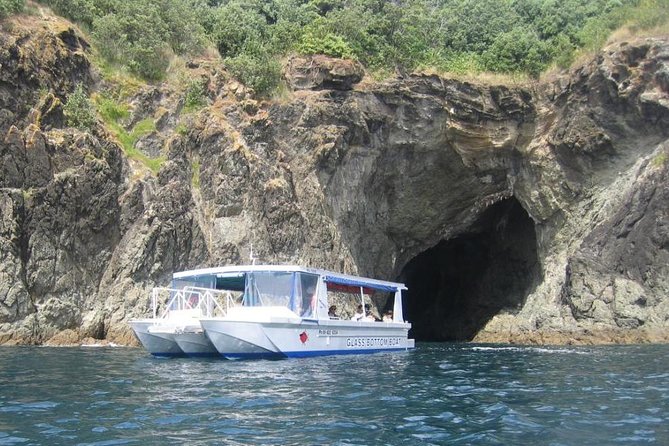
Goat Island underwater is easier than you think. This glass-bottom boat tour is a relaxing way to enjoy New Zealand’s first marine reserve without getting soaked, and you still get close views of fish and rays. You’ll also cruise scenic areas around the island, including caves you cannot reach any other way.
I especially like how the glass viewing panels let you watch marine life right from your seat, which is great when you have kids or anyone who just wants an easy outing. I also like that the boat route gives you more than one type of sight, from open-water wildlife spotting to a run through boat-access caves.
One drawback to plan for: fish numbers can change day to day. Tides, weather, and natural movement affect what shows up, so you might leave with fewer fish than you hoped for, even on a perfect day.
Key things to know before you go
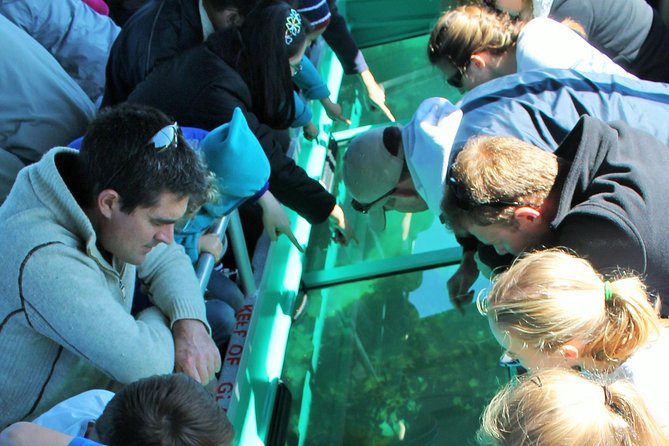
- Glass-bottom viewing means you can see fish up close without getting wet
- Goat Island Marine Reserve is open (no barriers), so species shift daily
- Caves are boat-only, including the Key Hole
- Wildlife variety can include rays, shags, blue penguins, and sometimes larger marine mammals
- A short format (about an hour) fits neatly into an Auckland half-day plan
- Family-friendly by design since kids can watch marine life from above the waterline
More sails on the Waitematā
- Auckland Harbour Sailboat Cruise Including Three Course Dinner★ 4.5 · 476 reviews
- America’s Cup 2-Hour Sailing Experience Waitemata Harbour★ 4.8 · 370 reviews
- Auckland: Scenic Harbour Sightseeing Cruise★ 4.5 · 369 reviews
- Auckland: Harbour Sailing Cruise with 3-Course Dinner★ 4.5 · 319 reviews
Goat Island Marine Reserve from a glass-bottom seat
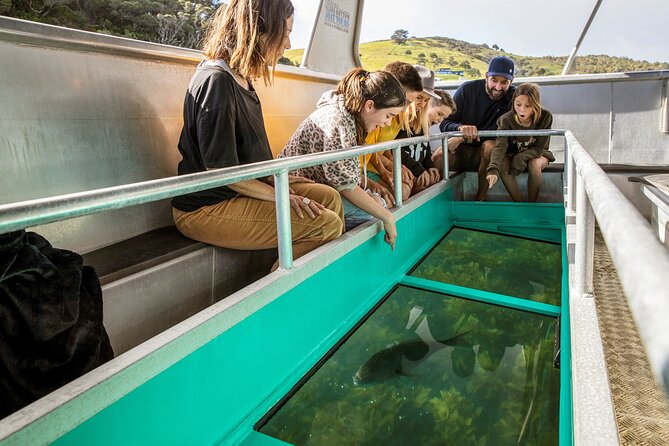
If you’re picturing cold seawater and snorkeling gear, this tour is the easy alternative. You get a licensed guide plus a close-up underwater view through the boat’s glass viewing area, so you can focus on wildlife instead of trying to stay afloat. It’s a rare setup where the main activity is simply looking, and the boat does the work.
Goat Island Marine Reserve is also the reason this feels so worthwhile. It’s an open reserve, meaning there are no barricades keeping marine life in or out, so the community you see can change with the day. That makes each trip a little different, which is exactly what you want from a marine-animals experience.
The experience is based around a gentle boat cruise, so it is not about speed or thrill. It’s about taking your time and noticing details, from fish behavior to seabed plants like kelp and seaweeds. You’re not standing on a crowded deck with nowhere to look, either, because the viewing is built into the boat.
One hour on the water: timing, comfort, and what you carry
Plan on about 1 hour total on the water. The schedule is designed around two main parts: a longer cruise within the marine reserve for wildlife viewing, then a shorter run to the back of Goat Island for the caves.
You’ll meet at Goat Island Marine Reserve in Leigh, New Zealand (Leigh 0985). Since the tour is described as something you make your own way to, build in travel time from Auckland or wherever you’re staying.
Bring what makes your sitting time easier. There’s no coffee or tea served, and you cannot bring food or other drink onto the boat besides water. Also note that there are no facilities at Goat Island Marine Reserve, so you’ll want to handle basics before you arrive, not mid-excursion.
Group size is capped at 49 travelers, which matters more than you might think. A lot of popular Auckland-area tours feel cramped, but a cap like this usually keeps the boat from turning into a loud, bumping crowd. You still get a guided experience, but without feeling like you are stuck in a queue.
First cruising pass: fish, rays, and the reserve’s ever-changing lineup
The cruise starts with the main marine reserve area, where you can see fish close-up through the glass. This is where you’ll likely spend the most time, roughly 50 minutes. The big idea is that you’re not just looking for a single species. You’re watching a whole underwater neighborhood.
Fish you may encounter include giant snapper, blue maomao, parore, red moki, goatfish, leather jackets, sweep, silver drummer, spotties, hiwi hiwi, marble fish, plus eagle rays and stingrays. Even if your favorite isn’t in that list, it’s the variety that keeps it interesting. You’re watching movement, grazing behavior, and the way fish react as the boat glides by.
Sometimes you’ll see larger visitors too, like dolphins, orca, whales, or seals. That’s not guaranteed, but it’s the kind of possibility that makes you sit a little longer at the glass and actually pay attention.
The reserve isn’t only fish, either. You can also spot marine life like kina, kelp, seaweeds, sponges, and anemones. Birds are part of the experience from above and around the route, with species such as pied shags, red-billed and Dominican seagulls, blue penguins, reef herons, terns, gannets, and petrels.
The vibe here is calm. You’re not rushing. You’re scanning the glass view, then letting the guide connect what you’re seeing to the marine reserve environment. If you like nature tours where you leave knowing the names of what you spotted, this is a good match.
Other boats leaving the same wharf
Why sightings vary: tides, weather, and an open marine reserve
Here’s the honest truth that helps you set expectations: you never know what you will see. The marine reserve is open, so the animals move freely and the species can change daily. On top of that, weather and sea conditions affect how marine life moves through the reserve.
In practical terms, this means you should treat fish density like a bonus, not a promise. If you get a day with fewer fish, you can still have a great experience because the reserve life you see is more than just one or two highlights. Kelp and seaweeds, plus the mix of invertebrates and rays, can keep the viewing interesting even when fish are not concentrated.
It also means you should check the weather before you assume you’ll go no matter what. The tour requires good weather, and if it’s canceled due to poor weather, you’ll be offered another date or a full refund. That’s not just fine print. It’s a way to protect the quality of the viewing.
If you’re someone who needs certainty, this might frustrate you a bit. But if you like real nature experiences where the ocean sets the terms, this variability is part of the charm.
Boat-only caves and the Key Hole
After the main reserve viewing, the tour heads to the back of Goat Island for the cave segment, about 10 minutes. This part is genuinely special because the caves are only accessible by boat. Few people get that angle, and it’s a nice change of pace from staring at fish.
You’ll cruise to see a set of caves, including the famous Key Hole. It’s one of those natural features that makes the whole outing feel like more than a standard wildlife float. Even if you’re not the biggest marine-life person, caves add a visual story, with rock, openings, and dramatic shapes you don’t see from shore.
The caves segment is short, so you’ll want to be present for it. Try to watch rather than drift into checking your phone the whole time. This is the part that can give you a different kind of memory, one that has nothing to do with which fish appeared.
The trade-off is time. Since it’s brief, you can’t expect a long cave slow-down like you might on other regional tours. Still, for an hour total, it’s a smart mix.
What you’ll see around Little Barrier Island
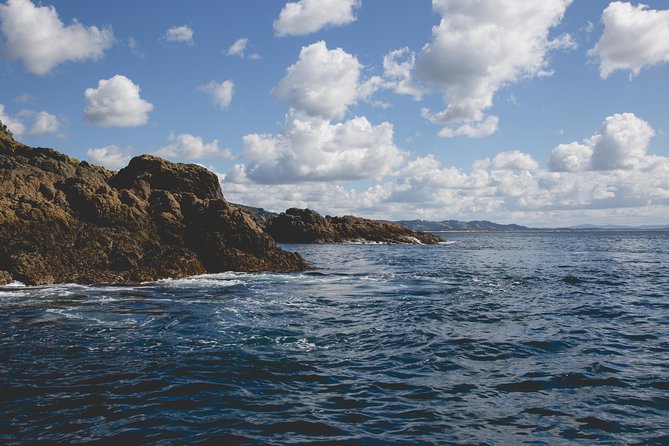
Along the way, you get views of other offshore islands such as Little Barrier Island. That adds context to the marine reserve. You’re not just looking at an isolated patch of sea. You’re seeing part of a bigger coastal and island system.
Those wider views matter more than people think, especially if you’re traveling with family. Kids can get restless when the only activity is looking downward, at glass. Island views give your eyes a break, and they also help you orient to where you are.
This isn’t a full land-and-view type of tour, though. It’s still first and foremost an underwater-glass experience. So if your priority is panoramic viewpoints from land, you may want to pair this with a nearby lookout stop outside the boat.
Families and the value of seeing without getting wet
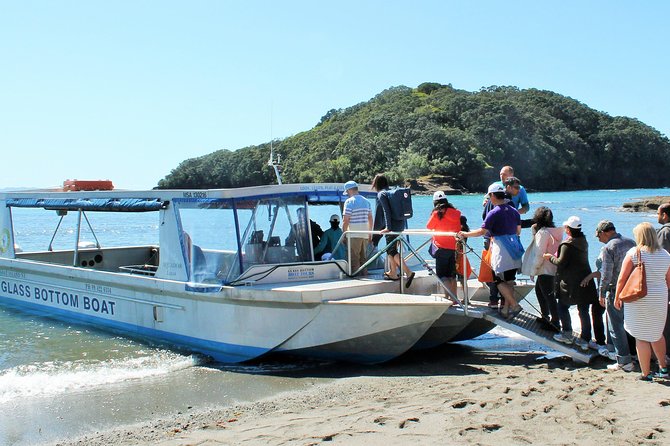
This is one of the best types of trips to bring kids on, because the main attraction is visible right under the waterline. Kids don’t need to get in the water, and nobody has to manage fins, goggles, or the inevitable gear drama that happens when kids are tired.
The glass-bottom setup also helps adults relax. You can stay seated, enjoy a guided explanation, and still feel like you’re getting a close encounter. For anyone who wants the fun of marine life without the hassle, it works.
It’s also a good choice if you’re mixing ages. One person might be obsessed with stingrays. Another might just want to see a blue penguin. The tour’s variety lets more than one person feel satisfied.
And yes, it’s still an ocean tour, so if someone is sensitive to boat movement, you might plan accordingly. The key is that the physical activity is minimal, and the main job is looking.
Price of $31.83 and whether it’s a smart use of time
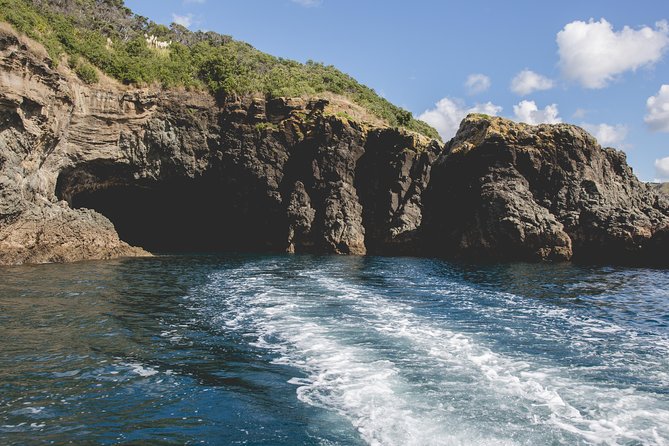
At $31.83 per person, the question isn’t whether it’s cheap. The question is whether it gives you a good slice of what Goat Island Marine Reserve is about.
For me, it earns the price in two ways. First, you get guided wildlife viewing through the glass without needing to bring equipment or commit to getting in the water. That saves time and hassle, and time is money when you are in Auckland with limited daylight.
Second, you get both underwater viewing and cave access in the same outing. Caves are the kind of experience people often end up missing because they are boat-only. Even though the cave portion is short, it adds a memorable second highlight to the price.
You also have a clean time commitment: about one hour. That matters if you’re planning a half-day trip north from Auckland or trying to fit something in between other activities. An hour you can actually protect is often better value than a half-day plan that runs long and burns your energy.
Should you book this glass-bottom boat tour?
Book it if you want an easy, family-friendly way to see marine life at Goat Island Marine Reserve, especially if you prefer looking over getting wet. The combination of glass viewing, a guide who helps connect what you see, and a boat route that includes caves makes it a strong fit for travelers who want variety in one short outing.
Skip it or temper expectations if you need guaranteed fish action every time. Sightings change daily with tides and weather, and no one can promise giant snapper in every glass panel. Still, even with fewer fish, rays, invertebrates, and the cave segment can keep the experience worthwhile.
If you’re in the Auckland area and you want a calm, structured wildlife outing that doesn’t require special gear, this is a solid booking. It’s also a great use of time when you want the marine reserve without turning your day into a complicated production.
FAQ
How long is the glass-bottom boat tour?
The tour runs for about 1 hour (approx.).
Where does the tour start and end?
It starts at Goat Island Marine Reserve, Leigh 0985, New Zealand, and ends back at the meeting point.
What is the maximum group size?
The tour has a maximum of 49 travelers.
What do you see during the tour?
You see marine life in the Goat Island Marine Reserve from the boat’s glass viewing area, plus caves at the back of Goat Island, including the Key Hole. Views can also include other offshore islands such as Little Barrier Island.
What kinds of marine animals might appear?
You may see snapper (including giant snapper), blue maomao, parore, red moki, goatfish, leather jackets, sweep, silver drummer, spotties, hiwi hiwi, marble fish, eagle rays, and stingrays. Sometimes dolphins, orca, whales, and seals are seen. You may also see kina, kelp, seaweeds, sponges, and anemones, along with seabirds such as pied shags and blue penguins.
Is food or coffee provided?
No. Coffee and/or tea are not included, and no food or drink other than water is allowed on the boat.
Are there facilities at Goat Island Marine Reserve?
No, there are no facilities at Goat Island Marine Reserve.
What happens if the weather is poor?
This experience requires good weather. If it is canceled due to poor weather, you will be offered a different date or a full refund.
More Tours in Auckland




More Tour Reviews in Auckland


Sailing the Waitematā



Newest Auckland tours to reach the site
- Waiheke Island: Gulf Marine Park Sailing Adventure & Lunch
★ 5.0 · 4 reviews - WAITOMO – Twin Caves Discovery – Private Day Tour from Auckland
★ 5.0 · 3 reviews - Volcanic Rotorua Day Trip from Auckland
★ 5.0 · 4 reviews - Waitangi Treaty Ground Day Trip Private Transport From Auckland
★ 5.0 · 3 reviews - Waitomo Caves Private Tour from Auckland
★ 3.5 · 3 reviews - Twilight Wild Kiwi Bird Encounter Private Tour
★ 5.0 · 3 reviews
Waitemata Harbour Boat Trips, compared.
 ★ 4.5Auckland Harbour Sailboat Cruise Including Three Course DinnerFrom $105476 reviews
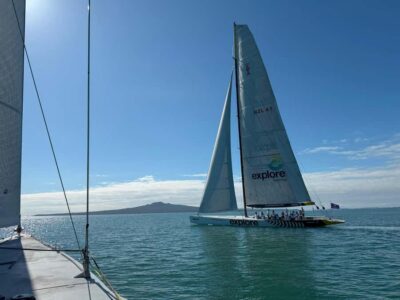 ★ 4.8America’s Cup 2-Hour Sailing Experience Waitemata HarbourFrom $125370 reviews
 ★ 4.5Scenic Harbour Sightseeing CruiseFrom $35369 reviews
 ★ 4.5Harbour Sailing Cruise with 3-Course DinnerFrom $95319 reviews
 ★ 4.7Auckland Harbour 1.5-Hour Sailing CruiseFrom $65301 reviews
 ★ 4.5America’s Cup Sailing on Auckland’s Waitemata HarbourFrom $130298 reviews
 ★ 4.0Auckland Harbour CruiseFrom $36224 reviews
 ★ 4.5Auckland Harbour Sailing ExperienceFrom $6879 reviews
Where else this tour turns up